Labour code rollout: Gig workers get social security for first time; what it means for Zomato, Swiggy, Uber riders

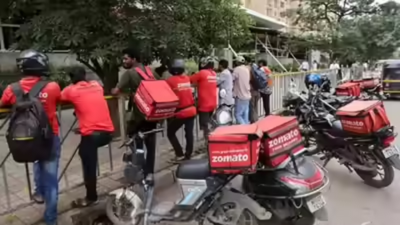 The overhaul transitions gig workers from the fringes of the unorganised sector into a regulated system with access to protections such as provident fund benefits, ESIC coverage, insurance, and mandatory appointment letters, experts said, reported news agency PTI.“For the first time, this rapidly expanding segment of the workforce, traditionally excluded from the conventional employer-employee relationship, gains legislative recognition and a foundational layer of social security,” said Preetha S, Partner, JSA Advocates & Solicitors.She added that the move also places new compliance responsibilities on platform companies, requiring contributions towards social welfare measures for workers.Platforms welcome policy shiftMajor gig-economy players signalled support for the changes and said they were evaluating operational adjustments.“We welcome the government’s intent to implement labour reforms, and we are evaluating the changes that have to be ushered in,” an Amazon India spokesperson said.A Rapido spokesperson said strengthening social security for gig and platform workers was “vital for long-term resilience and inclusion”.Eternal, parent entity of Zomato and Blinkit, said the labour codes would strengthen social security access without harming business viability.
Zepto said the move protects workers “without losing the flexibility that powers quick commerce”.India had 77 lakh gig workers in 2020-21, according to NITI Aayog, with the workforce projected to rise to 2.35 crore by 2029-30.
TeamLease estimates the current gig workforce at around one crore.“For years, the country’s gig workers subsidised its growth from the margins.
Today, they step into the system,” said TeamLease Regtech CEO Rishi Agrawal, PTI quoted him as saying.New rules to reshape HR policies, pay structuresAccording to EY India’s Puneet Gupta, the reforms introduce clarity and standardisation across compliance requirements.“For workers, the impact is significant; formal employees gain stronger protections and uniform benefits, while gig and platform workers are included in social security schemes for the first time,” he said.He added that compensation structures and employment models may be reshaped as firms align with uniform wage definitions and labour protections.Execution remains biggest challengeExperts cautioned that applying a formal benefits system to a workforce defined by flexibility, shifting hours and multiple income sources could complicate documentation and continuity of benefits.“The real test will be fitting a steady employment framework into a world where work is fluid… The direction of the codes is sound, but the ecosystem will need discipline and cooperation to make it real,” said Kartik Narayan, CEO of jobs marketplace Apna.Lohit Bhatia, President, India & Global Operations at Quess Corp, said real-time compliance and grievance resolution at scale would require strong digital systems and behavioural change.However, he added that simplified compliance frameworks, unified registers and national licensing “remove many previous bottlenecks and create a more modern, digital-first environment” to support responsible growth.