Trade revival push: India and Israel restart FTA talks after decade-long pause; GTRI says gains lie beyond goods trade
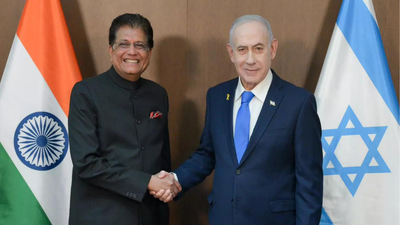
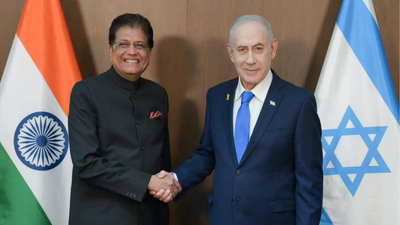 The trade and economic policy think tank, Global Trade Research Initiative (GTRI) said the renewed push reflects a strategic shift, even as the merchandise trade base between the two nations remains modest.GTRI Co-founder Ajay Srivastava said India and Israel had opened FTA negotiations in 2010 and held several rounds through 2012–13 before momentum faded over disagreements on tariffs, standards and access for sensitive products.
“After nearly a decade of inactivity, the effort has been re-energised following a series of high-level exchanges in 2024–25, and the two governments have finalised new Terms of Reference to relaunch negotiations,” he said.According to GTRI, Commerce Minister Piyush Goyal’s November 20–22 visit to Israel has set the stage for a possible two-phase approach, beginning with tariff reduction for goods and expanding later to investment and cooperation in technology transfer, defence, innovation, cyber security, AI, fintech, and precision agriculture.Despite the renewed political momentum, GTRI noted that the goods trade base between the two countries remains small.
India–Israel merchandise trade stood at $3.6 billion in FY2025.
India exported $2.1 billion worth of products, led by cut and polished diamonds ($555 million), rice ($102 million), organic chemicals ($96 million), ceramic tiles ($81 million) and aircraft parts ($54 million).Imports totalled $1.5 billion, driven by diamonds ($333 million), electronics ($350 million) including integrated circuits ($117 million) and electronic components ($66 million), as well as fertilisers ($135 million), insecticides ($63 million) and machinery ($91 million).GTRI said even with an FTA, the scale of goods trade is unlikely to expand sharply because Israel’s market of under 10 million is high-income, niche and already linked to major economies through earlier trade deals.
Sectors where India is competitive—agriculture, generics, steel and chemicals—either face regulatory barriers or see Israel offering tariff preferences to existing partners such as the EU and the US.As a result, GTRI said most of the commercial momentum will continue to come from a narrow set of goods, such as diamonds, rice and ceramic tiles.The real opportunity, the think-tank emphasized, lies in strategic collaboration.
This includes defence manufacturing, semiconductor design, electronics, water and irrigation technologies, precision agriculture, cybersecurity, frontier R&D and drip-irrigation systems—areas where both economies are already deeply engaged and see scope for expansion regardless of tariff outcomes.