iPhone chips to be made in India? Apple in talks with Indian chip manufacturers; why it’s significant


G1, which was launched on August 28, will function at a maximum capacity of about 0.5 million units daily.
The facility is capable of managing complete chip assembly, packaging, testing and post-test operations.CG Semi confirmed plans to begin commercial operations in calendar year 2026, in accordance with its commitment to the India Semiconductor Mission.
Apple’s chip plans for India
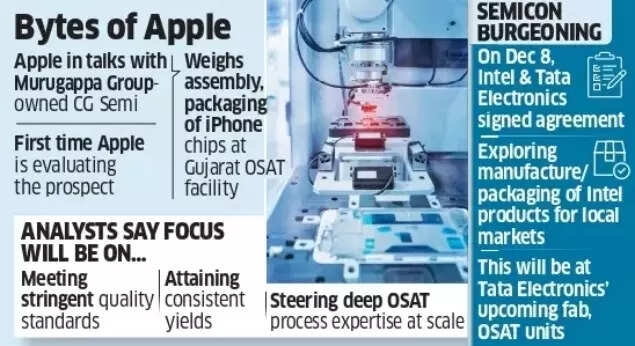
This is Apple’s first such evaluation of having specific chips assembled and packaged within India.
“The companies are in the very initial stages of discussion,” according to one source quoted by the financial daily.
“It is not clear what chips will be packaged out of the Sanand facility at this stage, but it will likely be display chips.”The source indicated that this could present a significant challenge for CG Semi, as advancing discussions would require meeting Apple’s strict quality requirements.
“Apple is already in talks with several companies for a number of other supply chain functions, and very few will end up on their supplier list,” the source said.
Bytes of Apple
A potential agreement would mean a notable advancement for India’s developing semiconductor sector, following Intel’s recent collaboration with Tata Electronics.
The December 8 agreement outlines plans to look at manufacturing and packaging of Intel products for domestic markets at Tata Electronics’ forthcoming fab and OSAT facilities.The firms indicated they would consider joint efforts in advanced packaging within India.
The packaging process serves essential functions, including component protection and performance enhancement.Industry analysts note that Apple’s iPhone display panels are sourced from leading OLED manufacturers: Samsung Display Corp, LG Display and BOE.
The display driver integrated circuit (DDIC) providers for these manufacturers include Samsung, Novatek, Himax and LX Semicon, who rely predominantly on facilities based in South Korea, Taiwan or China for chip production and packaging operations.“As India evolves into a crucial component of the global electronics supply chain, Apple could gain from increased stability and variety by potentially collaborating with an Indian chip manufacturer,” said Prabhu Ram, vice president, industry research group, CyberMedia Research.
“The main challenge—and opportunity—for CG Semi will be meeting Apple’s stringent quality standards, attaining consistent yields and steering deep OSAT process expertise at scale.“