CBAM impact: Carbon cost hits Indian steel and aluminium exports from Jan 1, here’s what GTRI report says
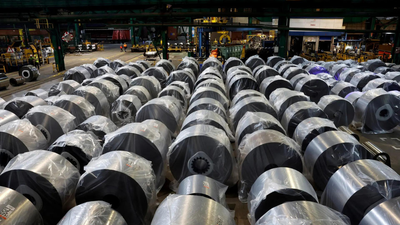
 Although the CBAM levy will be paid by EU-based importers, the report said the economic burden will be passed on to Indian exporters through lower realised prices, tougher contract terms and stricter supplier selection criteria.GTRI estimates that many Indian exporters may need to cut prices by 15–22% to remain competitive, allowing EU buyers to absorb the carbon cost through margins.From the first shipment of 2026, CBAM will become a commercial factor in pricing, even though formal certificate surrender will begin in 2027, the report said.EU buyers are expected to factor embedded carbon costs into procurement decisions from January 1, 2026, affecting price negotiations, contract clauses and supplier rankings.Exporters using high-emission production routes, such as blast furnace–basic oxygen furnace processes in steel, are likely to face the sharpest loss of competitiveness.
In aluminium, the carbon burden will depend largely on electricity intensity and the source of power used.The report said CBAM is a plant-level emissions accounting regime, requiring exporters to calculate embedded emissions for each installation, covering direct fuel combustion and electricity consumption.Corporate averages, ESG disclosures or sustainability reports will not be accepted under CBAM.
Without verified plant-level emissions data, exporters risk being assigned default emission values by EU authorities, which can be 30–80% higher than actual emissions and significantly raise carbon costs.From 2026, independent verification of emissions data will be mandatory, with only EU-recognised or ISO 14065–compliant verifiers accepted, the report said.GTRI said micro, small and medium enterprises are likely to bear a disproportionate share of the burden due to higher compliance and verification costs.“A key concern flagged in the report is that large producers often do not share plant-level emissions data with MSMEs that source steel or aluminium from them.
In the absence of verified data, EU authorities may apply default emission values, sharply inflating the carbon cost even when actual emissions are lower.” GTRI founder Ajay Srivastava noted.
“This asymmetry risks penalising MSMEs disproportionately and accelerating their exit from EU supply chains unless corrective mechanisms are introduced,” said Ajay Srivastava.The report said CBAM marks a shift in global trade dynamics, where carbon intensity, rather than cost efficiency alone, will increasingly determine competitiveness in regulated markets such as the EU.Low-emission producers could gain an advantage, while exporters that fail to align with CBAM’s data and verification requirements risk losing EU market access due to compliance gaps, it added.