EU–Mercosur trade deal row: Why are Irish farmers protesting against the pact; what’s at stake

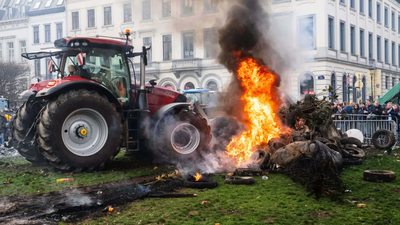
The protest formed part of wider demonstrations across Europe, with farmers marching in Poland and blocking roads in France and Belgium on Friday as the deal received political clearance.The EU–Mercosur agreement, negotiated over more than 25 years, aims to create one of the world’s largest free-trade areas, linking the 27-nation EU with Brazil, Argentina, Paraguay and Uruguay.
Under the pact, Mercosur would gain greater access to EU markets for agricultural products and minerals, while European exporters would benefit from lower tariffs on machinery, chemicals and pharmaceuticals.
Why farmers are protesting
Irish farmers say the deal threatens to undercut domestic agriculture by opening the door to large volumes of cheaper imports, particularly beef, from South America.
The agreement is opposed by farm groups over concerns that an additional 99,000 tonnes of low-cost beef could enter the EU market, putting pressure on prices and farm incomes in Ireland.These concerns prompted Ireland, France, Poland, Hungary and Austria to vote against the accord at the EU level.The Irish Farmers’ Association (IFA), the country’s main farming lobby, described the approval of the deal as “very disappointing” and said it would intensify efforts to block the agreement in the European Parliament.“We expect Irish MEPs to stand behind the farming community and reject the Mercosur deal,” IFA president Francie Gorman said in a statement.Although EU governments have approved the pact, it still requires backing from a majority of Members of the European Parliament in the coming months, where shifting alliances could influence the final outcome.