India eyes expansion of Mercosur trade pact to boost market access, investments: Piyush Goyal
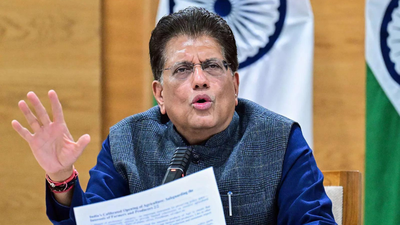
India is pushing to expand its preferential trade agreement with the Mercosur bloc as part of efforts to scale up trade and investment ties with Latin America, commerce and industry minister Piyush Goyal said on Saturday, signalling a broader reset in economic engagement with the region, PTI reported.
Speaking at Ficci’s India-Brazil Business Forum, Goyal said New Delhi is working to deepen market access and partnerships beyond the current limited framework of the India-Mercosur agreement.
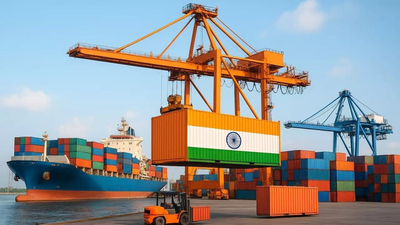
“The Mercosur region is particularly important for us, and we are working to expand our India-Mercosur preferential trade agreement, to improve market access, to grow investments on both sides, to have technology partnerships, and to engage in sports, education, culture,” he said.The existing India-Mercosur PTA — signed with Brazil, Argentina, Uruguay and Paraguay — came into effect on June 1, 2009 and presently covers only about 450 tariff lines.
Both sides are exploring ways to broaden it into a more comprehensive arrangement.Goyal said trade momentum between India and Brazil has improved but remains below potential despite recent gains.“We have to be significantly more ambitious,” he said, noting that bilateral trade rose 25 per cent to over $15 billion in 2025.
Brazil is India’s largest trading partner in the Latin America and Caribbean region.Highlighting expanding cooperation, the minister said engagement between the two countries now spans defence, energy, agriculture, agrochemicals, health, pharmaceuticals, renewable energy, critical minerals and aviation sectors.
He also invited Brazilian companies to step up investments in India.Goyal added that India is on track to overtake Germany within the next two years to become the world’s third-largest economy, driven by reforms in taxation, logistics, manufacturing and digital infrastructure, alongside measures to reduce compliance burdens and improve ease of doing business.“When we think of Brazil, we think of its rich natural resources, minerals like niobium, lithium and iron ore are vital for shaping the future of technology and global energy transition,” he said.“All of this comes together to make Brazil our strategic partner in global supply chains.
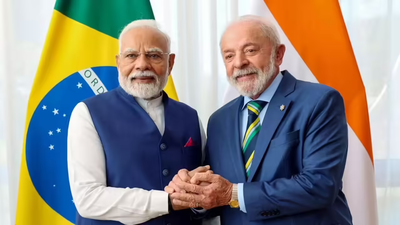
Together, we have the potential to reshape global supply or value chains with resources innovation and a forward looking vision,” the minister added.India and Brazil also agreed to target annual bilateral trade of $20 billion within five years and signed a cooperation pact on critical minerals following talks between Prime Minister Narendra Modi and Brazilian President Luiz Inacio Lula da Silva.Addressing the forum, Lula said trade expansion potential between the two economies remains significant.“That is a lot of growth, but it is still not much if we take into consideration Brazil’s and India’s size,” he said, adding that both countries are seeking stronger engagement beyond traditional markets such as Europe, the US, Japan and China.He said bilateral trade could eventually reach $30 billion.“We decided to change this because the potential, you know, of political, economic, cultural, scientific, technological integration between Brazil and India is something which is huge in its dimension,” Silva said.The Brazilian president said extending visa validity for business interns from five to ten years would support business collaboration and highlighted opportunities in bioenergy, noting Brazil’s expertise in ethanol and fuel technologies.“Brazil has at least 26 per cent of the world’s reserves of critical minerals…We want to attract the processing chain for this wealth…The agreement that we signed today with India goes in this direction,” he said.Silva added that Brazil aims to expand both exports to and imports from India while strengthening technology transfer and industrial cooperation.“We want to invest and consolidate our presence in India with the transfer of technology and personnel capacity building.
With the agreement signed by Embraer with the Adani and Mahindra groups, these agreements are going to allow for the production of commercial and defense aircrafts here in India,” he said.Both sides identified clean energy, electric mobility, health, aerospace, semiconductors and digital innovation as sectors offering strong potential for deeper collaboration