‘Lot that could go wrong’: Trump plans to tap Venezuelan oil reserves — what it means
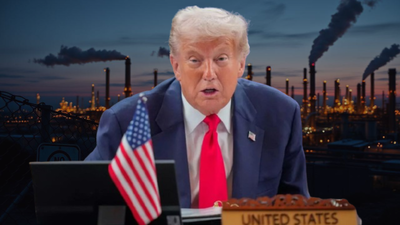
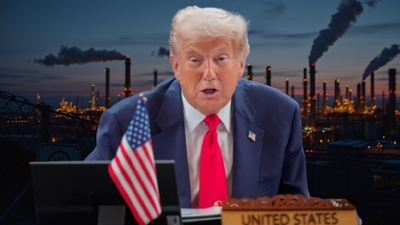
After a dramatic capture of Venezuelan President Nicolas Maduro by American forces, US President Donald Trump said that he wants to tap its oil infrastructure.
The bigger question, however, is whether such a move would yield any quick results.According to analysts, even if US oil giants invest billions of dollars in Venezuela’s massive oil reserves, they are unlikely to see a major rise in crude production anytime soon.
The South American nation is home to world’s largest estimated oil reserves, yet years of decline have left its production at a fraction of former levels, Reuters reported.
Output has steadily fallen due to poor management, underinvestment and the departure of foreign oil companies after Venezuela nationalised its energy sector in the 2000s.
The process included the takeover of assets belonging to Exxon Mobil and ConocoPhillips, prompting both firms to exit and pursue lengthy arbitration cases.
Challenges for US
Experts told Reuters that any company considering a return would face a long list of challenges.
These include serious security concerns including decaying infrastructure, unresolved legal questions surrounding the US operation against Maduro, and the risk of prolonged political instability.
Investors would also require clarity on sanctions and payment guarantees before committing capital.
According to Mark Christian, director of business development at CHRIS Well Consulting, American firms won’t return to Venezuela until they know for sure they will be paid and will have at least a minimal amount of security.
He further told Reuters that US sanctions would need to be lifted before companies reconsider their presence. At the same time, Venezuela would also have to change its laws to allow greater participation by foreign oil producers.Although Venezuela nationalised its oil industry as early as the 1970s, tensions escalated in the 2000s when companies were forced into joint ventures controlled by state oil firm PDVSA.
While some firms, including Chevron, negotiated arrangements to remain, others failed to reach agreements and took their disputes to international arbitration.“There is a lot that could go wrong,” said Thomas O’Donnell, an energy and geopolitical strategist.
“If Trump et al can produce a peaceful transition with little resistance, then in five to seven years there is a significant oil-production ramp up as infrastructure is repaired and investments get sorted out.” He noted that Venezuela’s heavy crude is a good fit for US Gulf Coast refineries and can be blended with lighter shale oil. However, he cautioned that a transition seen as dominated by Washington could trigger resistance.
“A botched political transition that has a feeling of US dominance can lead to years of resistance,” he said, referring to armed civilian and guerrilla groups operating in the country.At present, Chevron stands alone as the only US oil major still operating in Venezuela and is widely seen as best placed to benefit from any opening of the sector.
Francisco Monaldi, director of the Latin America Energy Program at Rice University’s Baker Institute, said other American firms would likely wait on the sidelines, assessing political stability, contractual terms and the broader operating environment before making any move.ConocoPhillips and Exxon Mobil could have strong incentives to re-engage.
ConocoPhillips is seeking more than $10 billion in compensation related to the takeover of three oil projects nearly 20 years ago.
“The company that probably will be very interested in going back is Conoco, because they are owed more than $10 billion, and it’s unlikely that they will get paid without going back into the country,” Monaldi said.
Exxon, while owed a smaller sum, could also return under the right conditions.“ConocoPhillips is monitoring developments in Venezuela and their potential implications for global energy supply and stability.
It would be premature to speculate on any future business activities or investments,” a company spokesperson said in emailed comments to Reuters.
Exxon did not immediately respond to requests for comment.Chevron exports roughly 150,000 barrels per day of Venezuelan crude to the US Gulf Coast and has carefully navigated its relationship with the Trump administration to maintain operations.
Chief executive Mike Wirth said in December that he had spoken with the administration about the importance of sustaining an American presence in Venezuela across political cycles.
The company, which has operated in the country for more than a century, said it remains focused on employee safety and asset integrity.
“We continue to operate in full compliance with all relevant laws and regulations,” a Chevron spokesperson said.
‘Zero benefit’?
OPEC and its allies are set to meet on Sunday and are expected to keep their current production policy unchanged.
Although the group has been increasing output since last year, raising fears of a global supply glut, it has agreed to pause output hikes for January, February and March.Ed Hirs, an energy fellow at the University of Houston, said recent developments in Venezuela are unlikely to have any immediate effect on US oil and petrol prices, as much of the country’s crude is currently shipped to Cuba and China.
He also drew parallels with previous US interventions in oil-rich nations.
“Trump now joins the history of US presidents who have overthrown regimes of oil-rich countries.
Bush with Iraq.
Obama with Libya.
In those cases, the United States has received zero benefit from the oil.
I’m afraid that history will repeat itself in Venezuela,” Hirs said.
No quick win?
While oil tankers chartered by Chevron have been among the few to leave Venezuelan ports in the past month, following Trump’s December announcement of a “blockade”, analysts say hopes of a quick win for US refiners remain uncertain.
Any rapid restart of Venezuelan crude flows to the US Gulf Coast appears unlikely for now.
From OPEC heavyweight to marginal producer
Venezuela was once a major force in global oil markets.
As a founding member of OPEC alongside Iran, Iraq, Kuwait and Saudi Arabia, it produced up to 3.5 million barrels per day in the 1970s, accounting for more than 7% of global output.However, production slipped below 2 million bpd in the 2010s and averaged about 1.1 million bpd last year, just 1% of global supply.