More scope for negotiation? What US SC tariff blow for Trump means for future of India’s trade deal
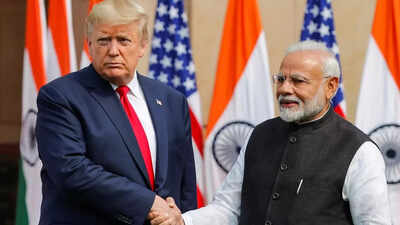
Following the US Supreme Court’s ruling late last week, an Indian delegation has postponed a planned trip to Washington.
India now has more room for negotiations in a trade deal with the US after the American Supreme Court ruled that Donald Trump’s tariffs are illegal.
The US Supreme Court’s move to invalidate President Donald Trump’s emergency tariffs has created additional room for India in ongoing trade negotiations, people aware of the discussions told Bloomberg. Reacting to the verdict, Trump has announced a 10% global tariff which he later raised to 15%.Both countries had agreed in February to reduce US tariffs on Indian exports to 18% from 50%.
In return, India expressed intent to purchasing $500 billion worth of American goods over a five-year period.
India-US trade deal: More scope for negotiation?
Following the court’s ruling late last week, an Indian delegation has postponed a planned trip to Washington that was intended to finalize the interim trade deal.
However, India is not weighing any withdrawal from the bilateral trade arrangement reached with Washington earlier this month, Bloomberg reported.
The two sides had been set to formalize the initial phase of their agreement next month, while continuing discussions toward a broader bilateral trade pact.According to people familiar with the discussions, India is expected to push for clauses that protect against similar judicial setbacks in the future.
One source noted that the decision has materially weakened Trump’s negotiating leverage.Although India has scaled back its imports of Russian oil in recent months – a key demand from Trump – it has continued to assert that decisions on crude oil buys will be guided by domestic energy requirements and prevailing market dynamics.Madhavi Arora, an economist at Emkay Global Financial Services Ltd., said India may now revisit elements of its trade understanding with the US, particularly since the risk of penal tariffs linked to Russian oil imports has gone.However, she added that India could still opt to gradually reduce such buys to preserve ties with Trump.
Arora suggested that the reduced pressure may allow India to push for improved terms without making significant concessions.In the aftermath of the verdict, India is proceeding cautiously, seeking to safeguard its commercial interests while minimizing potential tensions with the Trump administration, which has emphasized the importance of adhering to signed agreements.
Despite being among the earliest nations to initiate trade discussions with Washington, India ultimately faced some of the steepest tariff rates, even after multiple negotiation rounds and exchanges between leaders previously viewed as close allies.Interestingly, when Donald Trump was asked about the impact of the ruling on the India-US trade deal, he said, “”Nothing changes, they’ll be paying tariffs, and we will not be paying tariffs.
So, the deal with India is they pay tariffs.
This is a reversal for what it used to be.
I think Prime Minister Modi is a great gentleman, a great man, actually, but he was much smarter than the people that he was against in terms of the United States. He was ripping us off, India.
So we made a deal with India, it’s a fair deal now, and we are not paying tariffs to them and they are paying tariffs.
We did a little flip.”
India, China benefit from US SC ruling
China, India and Brazil are among the countries poised to benefit from reduced tariffs on exports to the United States after the apex court ruled that Donald Trump’s reliance on the International Emergency Economic Powers Act to levy tariffs was unlawful.
Although Trump later proposed a uniform global tariff of 15%, Bloomberg Economics estimated that this would translate into an average effective rate of roughly 12% — the lowest level since the “Liberation Day” tariffs were introduced in April.Jayant Dasgupta, India’s former ambassador to the World Trade Organization, said India should remain engaged with Washington to better understand its intentions and any prospective policy moves, and to maintain open dialogue.
Speaking to Bloomberg Television’s Haslinda Amin, he remarked that the direction of future developments remains uncertain.Finance Minister Nirmala Sitharaman said it was premature to offer detailed comments on the US SC’s decision, adding that the commerce ministry is currently evaluating the implications.