New headache for Indian H-1B holders! Many stuck due to visa stamping delays – risk of job loss, salary cuts causes worry


New
headache for Indian H-1B holders!
Many stuck due to visa stamping delays – risk of job loss, salary cuts causes worry” title=”<p>With visa interview appointments being deferred to March, April or even later, job prospects have become uncertain for some.
(AI image)<br></p>” decoding=”async” fetchpriority=”high”/>
According to immigration experts, many such workers have been unable to return to the United States after the Trump administration tightened scrutiny of applicants’ social media activity, leading to longer processing times.
H-1B Visa Stamping Delays
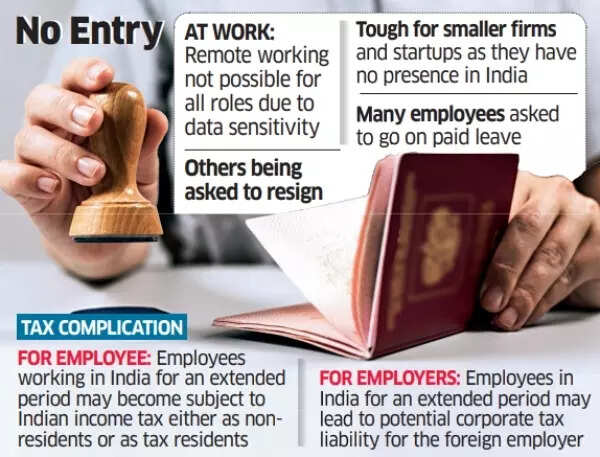
With visa interview appointments being deferred to March, April or even later, job prospects have become uncertain for some, particularly those employed by smaller firms and startups, according to an ET report.Not only that, any extended stay in India carries the risk of income tax implications.
Individuals who stay in the country beyond specified thresholds may become liable to pay Indian income tax, either as non-residents or as tax residents, adding to their financial burden.US companies with employees unable to return are now reportedly consulting immigration specialists, legal advisers and professional services firms to address any compliance and taxation relation challenges.
In some cases, employers are even directly approaching US embassies and consulates in an effort to secure earlier interview slots for their staff.“If for any reason, employees of US companies need to spend time in India, there could be potential tax implications both for such employees as well as their US employers that need careful evaluation,” Parizad Sirwalla, partner and national head, tax – global mobility services, at KPMG was quoted as saying.
Ankita Singh, founder of law firm Sarvaank Associates notes that if an H-1B visa holder stays in India for 182 days or more during a financial year, they are treated as a tax resident in India.
To manage the situation of employees who are unable to return to the United States, some American companies have permitted limited remote working from India or have even temporarily shifted such staff to their India-based subsidiaries.However, it’s not as simple as that.
Experts note that, from an employer’s standpoint, this arrangement requires a careful assessment of whether the employee’s work activities in India could give rise to any corporate tax exposure for the overseas entity.
Singh says that US employers are currently more focused on compliance risks and potential tax liabilities than on immigration-related issues when they allow remote working from India.“The question of H-1B professionals continuing to work remotely from India during visa stamping delays is being addressed through legally cautious, interim arrangements rather than any settled legal position,” said Tanmay Banthia, partner, Taraksh Lawyers and Consultants.Banthia also said that pay arrangements during this period of remote work from India vary from company to company and are guided by contractual terms and internal policies.
At the same time, some professionals stranded in India have approached legal advisers in an effort to avoid losing their jobs.“There are a few instances where the firms in the US have given an ultimatum to employees to join back once they exhaust their paid leaves or face termination,” Sukanya Raman, country head at immigration law firm Davies & Associates, told ET.Prolonged visa processing delays have begun to take a heavy personal and financial toll on affected workers and their families.
According to Raman, some employers are attempting to ease the situation by approaching US consulates to seek faster visa appointment dates for employees stranded in India.
However, many large corporations are simultaneously limiting the type of work these employees are permitted to carry out remotely from India.The disruptions have also led to families being separated, with cases where one spouse or children remain in the United States while the main income earner is stuck in India, or the reverse, said Ankita Singh of Sarvaank Associates.
In such situations, families often continue to bear US living costs, including rent, vehicle leases and utility bills, even as incomes are reduced or temporarily halted.Smaller US firms, particularly those without the legal resources to manage such complex cross-border arrangements, have in some cases asked affected employees to resign or take unpaid leave.
A range of human resources challenges has also emerged, including difficulties in assessing performance, restrictions on carrying out core job responsibilities, questions around insurance and benefits coverage during overseas stays, as well as issues related to time zone differences and team coordination.Immigration specialists also noted that H-1B visa holders are facing increased scrutiny at US ports of entry, with some being denied re-entry over concerns related to unauthorised remote work while abroad.
“Prolonged periods spent outside the US—nearing six months—can invite questions at the port of entry about whether the individual has effectively disengaged from US employment,” said Keshav Singhania, head – Private Client at law firm Singhania & Co.