‘Severely damaging’: Domestic copper sector under strain; industry warns against ‘zero-duty imports under FTAs’
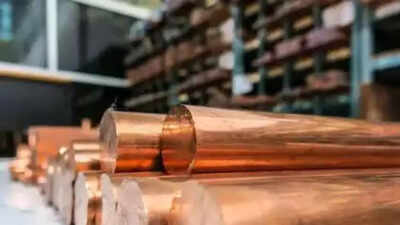
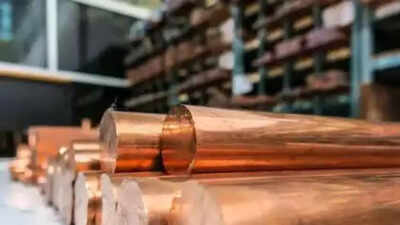 The industry body said a surge in zero-duty copper imports is eroding India’s smelting and downstream manufacturing base, even as more than Rs 20,000 crore has been invested in recent years to build domestic self-sufficiency.
“Zero-duty imports from FTA partners are severely damaging Indian smelting and refining,” the IPCPA said.
Calling for a 3% safeguard duty on select copper imports, regardless of FTA status, the association stated, “the copper industry seeks urgent government intervention to address FTA-related issues through…
imposing an additional three per cent duty on imports of (copper cathode, rod, wire and tube), implementing quantitative restrictions on imports to safeguard the domestic copper industry.”The association flagged concerns over the India–UAE Comprehensive Economic Partnership Agreement (CEPA), under which customs duties on copper wire rods have fallen to 1% in FY26 and are set to be fully eliminated by FY27.It said the problem has been aggravated by an inflated tariff rate quota (TRQ) of 85,000 tonnes per annum (KTPA), far above the intended 29 KTPA.
This, according to IPCPA, led to a 340% surge in copper imports from the UAE between FY22 and FY26.
The group demanded that the TRQ be corrected and capped at its original level.
The TRQ mechanism allows a specified quantity of imports at reduced or zero duty.The IPCPA also raised issues with the India–ASEAN CEPA, which includes a cumulative value-addition rule.
This provision allows Indonesian copper cathodes, after significant processing in Indonesia, to undergo minimal further treatment in countries such as Thailand, Malaysia or Vietnam before entering India duty-free.
Between 2020 and 2024, this resulted in a 66% rise in copper wire imports and a 103% jump in copper tube imports, PTI reported.At the same time, Indonesia has significantly expanded its smelting capacity, strengthening its export position.
Chinese investments in ASEAN copper operations have further distorted competition, prompting Indian producers to demand that copper wires, tubes and foils be added to the exclusion list as part of the ongoing FTA review.The IPCPA said the global copper smelting industry is under severe stress, with one of its key revenue streams — Treatment and Refining Charges (TC/RC), having collapsed by nearly 80% .
For 2026, TC/RC levels are projected to fall to zero, threatening the viability of smelting and refining operations in India.This pressure is being compounded by zero-duty imports of copper cathodes, rods, wires and tubes from the UAE, ASEAN and Japan under various FTAs, which are displacing domestic output, they added.