Short-term loan dependence puts Pakistan’s economic stability at risk
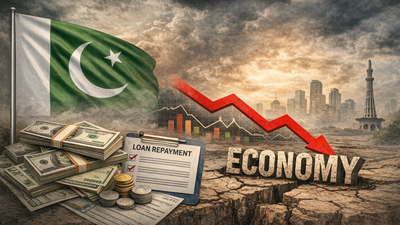
Representative image (AI)
The economy of Pakistan is in a risky state due to its over-reliance on short-term foreign loans, according to business leaders and economists.
Key figures are calling for urgent negotiations with friendly nations to extend loan repayment periods and implement structural reforms, as reported by Express Tribune.Vice chairman of the Pakistan industrial and traders associations front (PIAF) Raja Waseem Hassan warned that without extending loan maturities, the country will continue to face balance-of-payments problems.
While foreign reserves have grown to $21 billion in January 2026, experts say this improvement relies too heavily on temporary support from international institutions and friendly countries.
“The government must immediately begin serious negotiations with friendly nations to secure longer repayment periods and ease pressure on foreign exchange reserves,” said Hassan.
He welcomed recent positive diplomatic developments with Gulf states and the United States but cautioned that these relationships can change quickly.The country’s trade performance remains concerning.
Exports stood at $32 billion in FY25, while imports continue to exceed export earnings.
Dr.
Saleem Ahmed, a senior economist, warned that Pakistan can’t rely forever on rollovers and short-term deposits.
He suggests the country needs 5-6 per cent annual growth to stabilize its debt-to-GDP ratio, which currently hovers around 70 per cent.Economic growth prospects remain modest.
The IMF expects 3.6% GDP growth for FY26, while the State Bank of Pakistan projects 3.75-4.75%.
Though inflation has dropped from its 38% peak in 2023, strict monetary policies have slowed industrial growth and business lending.Experts recommended focusing on export-oriented sectors like textiles, IT, and agricultural processing.
They suggest improving tax collection, reducing energy waste, and boosting remittances, which could reach $42 billion in FY26.
They also stress the need to increase foreign direct investment beyond its current annual level of $1.5-2 billion to reduce dependency on external borrowing.Hassan pointedout that while Pakistan’s military importance can help in diplomacy, economic strength is crucial for long-term stability.
“Economic strength must be the real shield.
Without strong buffers and self-reliance, external partnerships alone cannot guarantee stability,” he said.