UAE drops corporate tax for sports bodies under new law: Here’s who qualifies
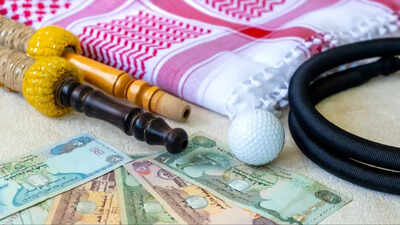
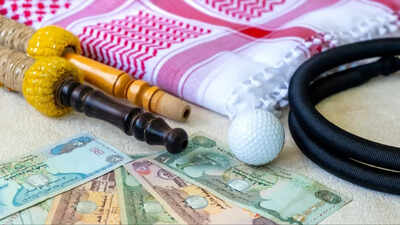
In a significant fiscal and policy shift this week, the United Arab Emirates Ministry of Finance announced a new corporate tax exemption for non-commercial sports entities under Cabinet Decision No. (1) of 2026, marking a major development in how the UAE supports and positions its sporting ecosystem.
The move is part of ongoing reform under the broader Federal Decree-Law No.
47 of 2022 on the taxation of corporations and businesses, aimed at strengthening the UAE’s reputation as a global sports hub while aligning with international best practices.
What the new UAE tax rule says
Under the new decision, international sports entities, national sports organisations and related ancillary bodies that operate on a non-commercial basis will be eligible for full exemption from corporate tax, a significant departure from the UAE’s standard corporate levy system.
However, this exemption applies only to organisations whose primary purpose is the promotion, management, organisation or development of sports at a regional or international level and which are officially recognised by the Ministry of Sports or another competent authority.To qualify, an entity must also be strictly non-commercial, meaning that it does not engage in unrelated business activities beyond its core sports mission and must commit all income and assets to fulfilling its sporting objectives or covering essential, reasonable expenses.
Guardrails to prevent abuse of new UAE tax rule
To ensure the exemption is not misused, the Cabinet decision includes clear restrictions on how income and assets can be deployed.
Crucially, no profits or assets may be distributed for personal benefit of members, founders, trustees, shareholders or stakeholders, unless they fall under certain approved categories such as qualifying public benefit entities, government bodies, or government-related organisations.This safeguards the exemption for genuine sports-focused, non-profit entities and upholds principles of transparency, public interest and accountability in tax policy.
How to qualify for UAE tax exemption: Application process
Sports organisations seeking the tax break must apply directly to the Federal Tax Authority (FTA) with all requisite documentation demonstrating eligibility.
This includes proof of recognition by the Ministry of Sports (or equivalent authority), a detailed description of sporting activities, evidence that income and assets are used in line with sporting objectives and compliance data showing they do not derive profit from unrelated commercial activities.

UAE Grants Tax Break to Sports Bodies: Who Benefits and Who Pays?
The authority will assess applications to confirm that each entity genuinely contributes to the UAE’s sports ecosystem and meets the eligibility criteria before granting corporate tax-exempt status.
This new exemption sits within a larger UAE strategy to not just host global sporting events but to build sustainable sporting institutions and infrastructure that can nurture talent, organise international competitions and support sports development across age groups and disciplines.By removing the corporate tax burden for qualifying sports bodies, the UAE is encouraging deeper investment and operational growth within the sector.
This move is expected to expand participation, attract international federations, and make the nation an even more attractive base for global sports organisations.For example, the UAE has hosted major global sporting events across football, golf, motorsports and Formula 1 in recent years, bolstering tourism, international engagement and economic activity around these spectacles.
The tax exemption could help entrench sports as a pillar of cultural and economic development rather than a costly operational hurdle.Officials at the Ministry of Finance have framed the exemption as part of a longer-term goal to “boost the sports sector’s contribution to the national economy”, nurturing a domestic sports ecosystem that can generate jobs, develop homegrown athletes and captivate global audiences.
This aligns with broader UAE policy efforts to diversify the economy beyond traditional sectors like oil and real estate, focusing on knowledge-based industries, tourism, culture and now sports as engines of growth.
Comparisons with other corporate tax incentives in the UAE
The UAE’s corporate tax law already includes exemptions for a range of entities tied to broader public benefit activities, including educational, charitable, cultural and healthcare organisations under Article 9 of the tax code, provided they meet stringent eligibility requirements.
The new sports exemption can be seen as consistent with this wider framework of targeting tax relief to non-profit, mission-driven organisations whose activities serve public interest rather than commercial profit.
Implications for sports organisations in the UAE
For clubs, federations and international sporting bodies, including those running leagues, competitions, training programs or youth development initiatives, the exempt status can free up resources previously earmarked for tax obligations and redirect them toward expanded programming, infrastructure, coaching and international outreach.

UAE Tax Exemption for Sports: A Boost for Athletes or a Loophole for the Rich?
Small and emerging sports entities, which often struggle with funding constraints, could find the exemption particularly impactful, enabling them to operate more sustainably and focus on long-term development objectives.
The exemption is not automatic as applying organisations must navigate the formal eligibility verification process through the Federal Tax Authority, which will involve documentation, governance verification and ongoing compliance reporting to ensure they continue to meet the non-commercial criteria.Some analysts note that this process, while essential for preventing misuse, could be challenging for smaller clubs or regional organisations attempting to meet strict documentation or organisational governance standards.
However, authorities have emphasised support structures to help entities through the application and compliance journey.
UAE national sports vision and global positioning
The UAE’s tax exemption, coming at a time of rapid development in its sports ecosystem and international event hosting calendar, positions the country to compete with global sports hubs like Europe, the US and East Asia, not just as a venue for events but as a centre for sports institutions and international federations.
As sports become an increasingly strategic tool for soft power, cultural exchange and economic diversification, the tax exemption could amplify the UAE’s role in shaping global sports governance and development frameworks.The decision to exempt non-commercial sports entities from corporate tax reflects an expansive view of sports as a national asset rather than a purely recreational or commercial sector.
By aligning fiscal policy with sports development goals, the UAE strengthens the ecosystem from grassroots to elite competition, promotes international engagement and enhances economic diversification ambitions.Whether this leads to greater participation, deeper international partnerships or measurable economic contributions remains to be seen but the exemption sets the stage for a new era of sports growth and institutional support in the Emirates.