US-Taiwan trade deal: China ‘resolutely opposes any agreement’; urges Washington to adhere to one-China principle
 “China consistently and resolutely opposes any agreement…
signed between countries with which it has diplomatic relations and the Taiwan region of China,” ministry spokesman Guo Jiakun said.
The Asian giant further urged Washington to adhere to the one-China principle.
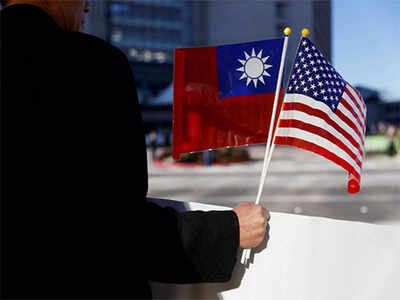
China claims Taiwan as part of its territory. The United States and Taiwan finalised a trade deal on Thursday (local time), lowering tariffs on Taiwanese goods in exchange for $250 billion in new investments in the US technology sector.
The move forms part of US President Donald Trump’s broader trade strategy, which includes agreements with the European Union and Japan, as well as a one-year trade truce with China designed to stabilise relations with the world’s second-largest economy. Under the deal, tariffs on Taiwanese products will drop from 20% to 15%, aligning with rates applied to other Asia-Pacific trading partners, including Japan and South Korea.
The US Department of Commerce described the agreement as “a historic trade deal that will drive a massive reshoring of America’s semiconductor sector,” establishing an “economic partnership” to develop world-class industrial parks within the United States. Taiwan’s government confirmed that the agreement would strengthen the “Taiwan model” in the US, helping to expand the island’s technology competitiveness while deepening strategic cooperation between the two nations.
Taiwanese companies will specifically invest $250 billion in sectors such as semiconductors, artificial intelligence, and energy.
The deal also exempts certain imports from tariffs, including generic pharmaceuticals and aircraft components, while Taiwanese semiconductor firms investing in the US will receive favourable tariff treatments. Beijing had already criticised the arrangement before its announcement, calling it “an economic plunder” by the US on Taiwan.